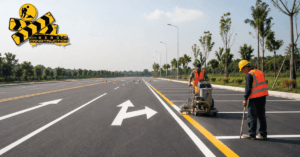
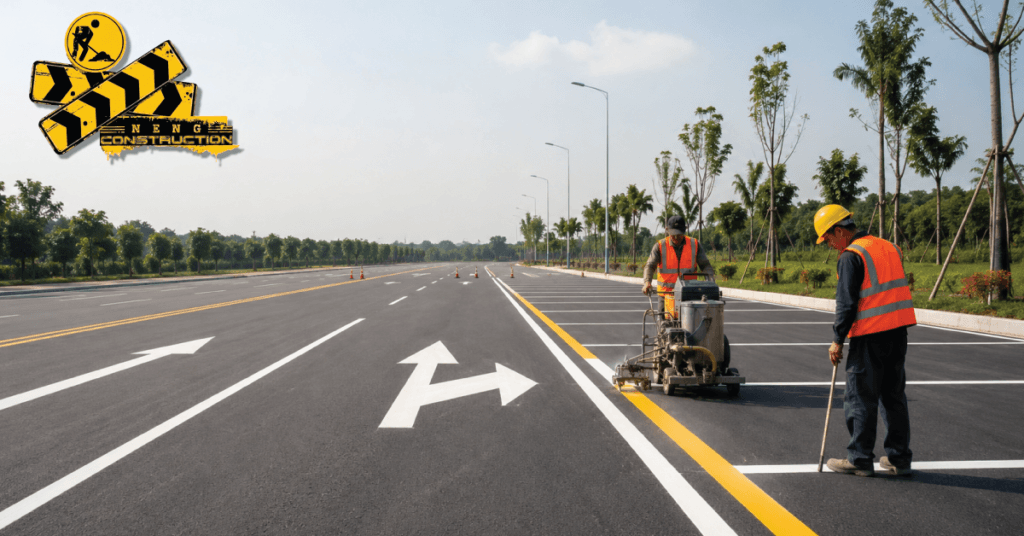
When looking at a road, parking area, or factory site, one of the most noticeable features besides the road surface is the white lines, yellow lines, arrows, and symbols painted on the ground.
These markings may look like small details, but they play an important role in daily use. They help guide traffic, separate lanes, organize spaces, and reduce confusion among drivers and pedestrians.
This type of work is called road marking or traffic line painting.
Road markings are not only used to make an area look neat. They also help roads, parking lots, factories, warehouses, and project sites operate more safely and efficiently.
This article explains what road markings are, what types are commonly used, what materials are available, and how surfaces should be prepared before painting begins.
What Is Road Marking?
Road marking is the process of applying lines, symbols, and visual signs on roads or working surfaces to guide traffic, organize areas, and communicate important information to users.
These markings may include:
- Traffic lane lines
- Road edge lines
- Stop lines
- Pedestrian crossings
- Directional arrows
- Parking space lines
- Accessible parking symbols
- Numbers or letters on the ground
- No-parking areas
- Loading and unloading zones
Even without reading any signs, drivers can usually understand where to drive, where to stop, and where parking is allowed simply by looking at the markings on the surface.
Why Are Road Markings Important?
In areas without clear road markings, users often have to make their own decisions. This can lead to confusion, vehicles moving in conflicting directions, disorganized parking, and unnecessary safety risks.
Proper road markings help solve these problems in several ways.
1. They Guide Traffic Direction
Directional arrows, lane lines, and road edge lines help drivers understand how to move through an area, especially where there are multiple entry and exit points.
2. They Reduce Confusion
Large areas such as factories, warehouses, parking lots, and residential projects can become confusing when there are no clear traffic lines or zone boundaries.
3. They Improve Safety
Stop lines, pedestrian crossings, and no-parking areas help warn drivers to slow down, stop, or pay extra attention in important locations.
4. They Organize Parking Areas
Clearly marked parking spaces help make better use of available space, keep vehicles orderly, and reduce blocked driveways or traffic lanes.
5. They Improve the Overall Appearance of the Area
Clear road markings make a space look more organized and professional. This is especially useful for factories, office buildings, distribution centers, residential projects, and commercial areas.
What Types of Road Markings Are Commonly Used?
Road markings come in different forms, and each type serves a different purpose depending on the area and its intended use.
| Type of Area | Benefits of Road Marking |
|---|---|
| Parking Lots | Defines parking spaces and improves organization. |
| Factories | Separates vehicle routes, pedestrian walkways, and hazardous areas. |
| Warehouses | Organizes loading zones and helps reduce obstructions. |
| Residential Communities | Helps define traffic directions and designated parking areas. |
| Office Buildings | Organizes parking areas, entrances, and exits. |
| Distribution Centers | Separates truck routes and loading areas. |
| Educational Institutions | Improves safety at pedestrian crossings and pick-up and drop-off points. |
| Commercial Areas | Makes the area easier and more convenient for customers to use. |
A good road marking design should include only what is necessary. Too many markings can make the surface look confusing, while too few can leave users guessing.
What Do Road Marking Colors Mean?
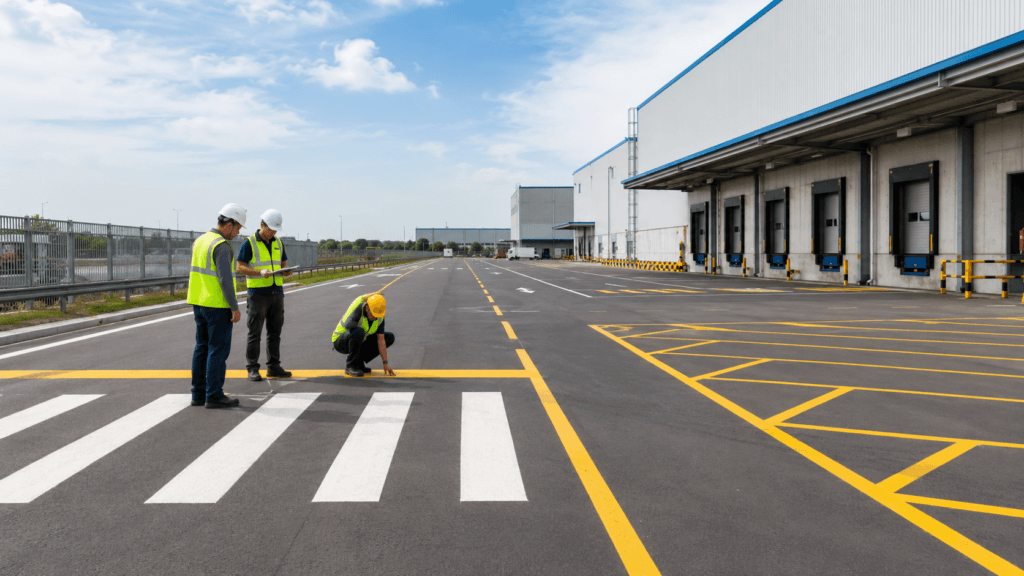
Colors help users understand the purpose of different lines and zones more easily. The most commonly used colors include:
| Color | Common Uses |
|---|---|
| White | Lane divider lines, edge lines, parking spaces, and directional arrows. |
| Yellow | Traffic direction divider lines, warning areas, or locations requiring extra caution. |
| Red | No-parking zones, hazardous areas, or restricted areas. |
| Blue | Accessible parking spaces for people with disabilities or other designated areas. |
| Green | Specific designated areas, such as walkways or planned usage zones. |
However, color selection should be based on the type of area, relevant standards, and actual user understanding. It should not be chosen for appearance alone.
What Materials Are Used for Road Marking?
Several materials can be used for road marking. The right choice depends on the surface type, traffic volume, weather conditions, and budget.
1. Fast-Drying Road Paint
Fast-drying road paint is convenient and suitable for general parking lots, internal project roads, and areas with moderate use.
Its main advantage is quick application, but durability may vary depending on paint quality and surface condition.
2. Thermoplastic Road Marking
Thermoplastic road marking is a material that must be heated before application. Once cooled, it bonds to the road surface and forms a thicker marking layer.
This material is commonly used in areas that require greater durability because it can resist vehicle friction more effectively.
3. Reflective Materials
In some locations, reflective glass beads may be added to road markings to improve visibility at night or in low-light conditions.
The choice of material should not be based on price alone. It should also match the actual surface condition and intensity of use.
What Types of Surfaces Can Be Marked?
Road markings can be applied to several types of surfaces, including:
- Asphalt surfaces
- Concrete surfaces
- Parking areas
- Factory floors
- Warehouse floors
- Internal project roads
- Walkways and selected indoor areas
Each surface has different characteristics in terms of smoothness, dust, moisture, and adhesion. The preparation method and marking material should therefore be selected carefully.
For example, newly paved asphalt should be ready before marking begins. Old concrete surfaces with dust, oil stains, or moisture may need cleaning and repair first.
General Steps in Road Marking Work
Quality road marking work does not begin by opening a paint container and drawing lines immediately. It should start with inspection, planning, and proper surface preparation.
1. Site Inspection
Before starting, the area should be inspected carefully. Important factors include:
- Area size
- Entry and exit points
- Turning areas
- Parking zones
- Pedestrian routes
- Areas where confusion may occur
This information helps determine which types of lines are needed and where they should be placed.
2. Traffic Layout Planning
For areas with regular traffic movement, a clear traffic layout should be planned. This may include:
- Entry and exit points
- Traffic direction
- Stop points
- Pedestrian crossings
- Parking spaces
- No-parking zones
- Loading areas
- Truck routes
- Pedestrian walkways
This step acts like a map for the ground surface. When the layout is clear from the beginning, actual use becomes smoother and safer.
3. Surface Cleaning
The surface should be free from dust, soil, oil stains, standing water, and loose materials. These can reduce paint adhesion and cause markings to peel off prematurely.
4. Line Positioning
Before painting begins, the position, width, and direction of each line should be clearly marked to ensure straight lines and consistent spacing.
5. Paint or Material Application
The application method depends on the chosen material and surface type. Common methods include road marking machines, spray application, and thermoplastic application.
6. Drying or Setting Time
After the markings are applied, the material should be allowed to dry or set properly before the area is reopened. This prevents wheel marks, smudges, and early damage.
7. Final Inspection
The finished work should be checked for straightness, clarity, spacing, color consistency, and correct placement. The markings should also match the actual traffic flow of the area.
Why Do Some Road Markings Peel Off Quickly?
Premature peeling is not always caused by poor paint quality. Several other factors may also be involved.
1. Dirty Surface
Dust, oil stains, and moisture can prevent the paint from bonding effectively to the surface.
2. Incorrect Material Selection
A material suitable for a small parking lot may not be durable enough for an area where trucks turn frequently.
3. Opening the Area Too Soon
If vehicles pass over the markings before the paint dries or the material sets, the lines may smudge, crack, or peel off early.
4. High-Friction Areas
Curves, turning points, ramps, and braking areas tend to wear faster than straight sections because vehicle tires create more friction.
5. Damaged Existing Surface
If the road surface is already cracked, loose, or deteriorated, applying markings without repairing the base may cause the lines to fail as well.
Which Areas Should Have Road Markings?
Road markings are not only for public roads. They are also useful for many types of private and commercial spaces.
| Type of Area | Benefits of Road Marking |
|---|---|
| Parking Lots | Defines parking spaces and improves organization. |
| Factories | Separates vehicle routes, pedestrian walkways, and hazardous areas. |
| Warehouses | Organizes loading zones and helps reduce obstructions. |
| Residential Communities | Helps define traffic directions and designated parking areas. |
| Office Buildings | Organizes parking areas, entrances, and exits. |
| Distribution Centers | Separates truck routes and loading areas. |
| Educational Institutions | Improves safety at pedestrian crossings and pick-up and drop-off points. |
| Commercial Areas | Makes the area easier and more convenient for customers to use. |
In some locations, road markings also help separate pedestrians from vehicles, reducing risk where both share the same space.
What Information Should Be Prepared Before Road Marking?
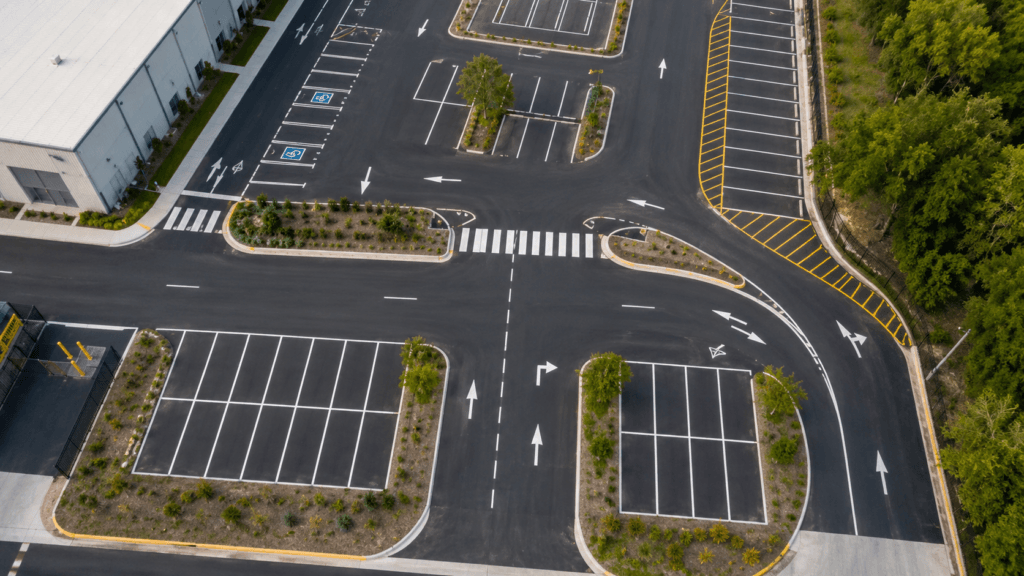
After the work is completed, the following points can be checked:
- Lines are straight and continuous
- Line widths are consistent
- Colors are clear and not too thin
- Edges are sharp and not excessively blurred
- Parking spaces are evenly sized and spaced
- Arrows and symbols are placed in understandable positions
- Paint has not spread outside the intended lines
- Markings do not peel off shortly after use begins
- The marking layout matches actual traffic movement
Good road markings do not have to be complicated. They simply need to be clear, practical, and easy to understand.
When Should Road Markings Be Inspected or Repainted?
Road markings naturally fade over time, especially in areas with frequent traffic or high tire friction.
They should be checked regularly. If the lines begin to fade, become difficult to see, or cause confusion, repainting should be considered.
Areas that deserve special attention include:
- Curves
- Intersections
- Turning points
- Entry and exit areas
- Stop lines
- Pedestrian crossings
- Parking spaces
- Loading areas
- Locations where trucks turn frequently
Repainting before the markings disappear completely helps maintain order and reduce safety risks.
Summary
Road marking is an important part of roads, parking lots, factories, warehouses, and other working areas. It helps guide traffic, organize spaces, reduce confusion, and improve safety.
The quality of road marking work does not depend only on how bright the paint looks. It also depends on layout planning, surface preparation, material selection, and proper drying time.
A simple way to remember this is:
Good road markings are not only meant to be seen. They are meant to tell users what to do at each point.
A road may be a space for movement, but the lines on the road are the language that helps everyone use that space safely and efficiently.