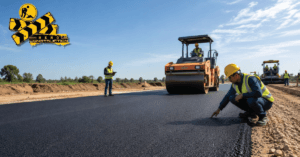
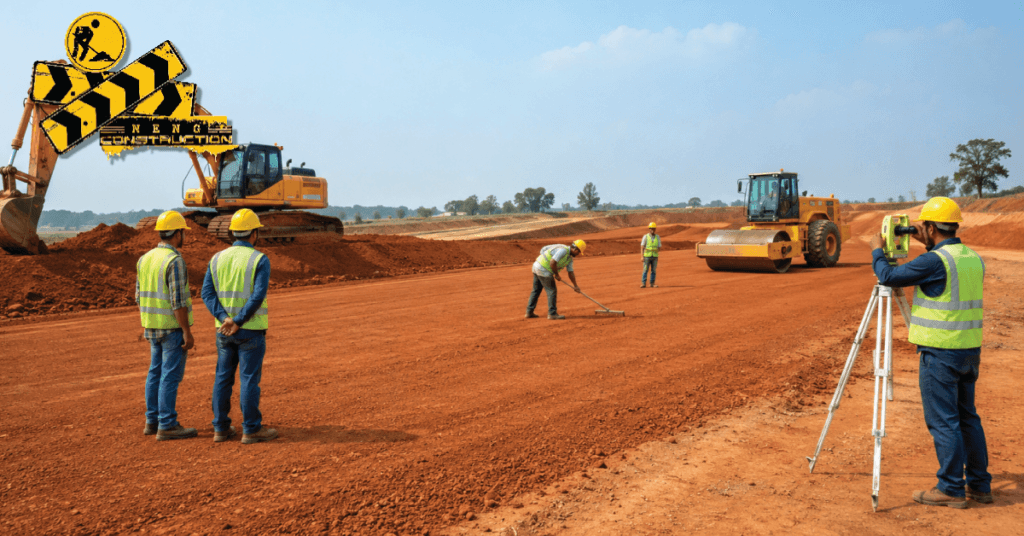
Before an area becomes a road, parking lot, storage yard, project entrance, or a usable outdoor space, the work does not begin with pouring concrete, laying asphalt, or applying the final surface layer.
It starts with something many people often overlook: land grading and laterite soil filling.
Land grading and laterite soil filling act like the backbone of outdoor ground preparation. When the base is firm, properly leveled, and designed for good drainage, the next construction steps are more likely to last longer. But if the ground underneath is soft, uneven, or prone to waterlogging, even a surface that looks good on the first day may develop problems later.
This article explains what land grading means, what laterite soil is, where it is commonly used, and why this step is important before building roads, parking areas, or other usable outdoor surfaces.
What Is Land Grading?
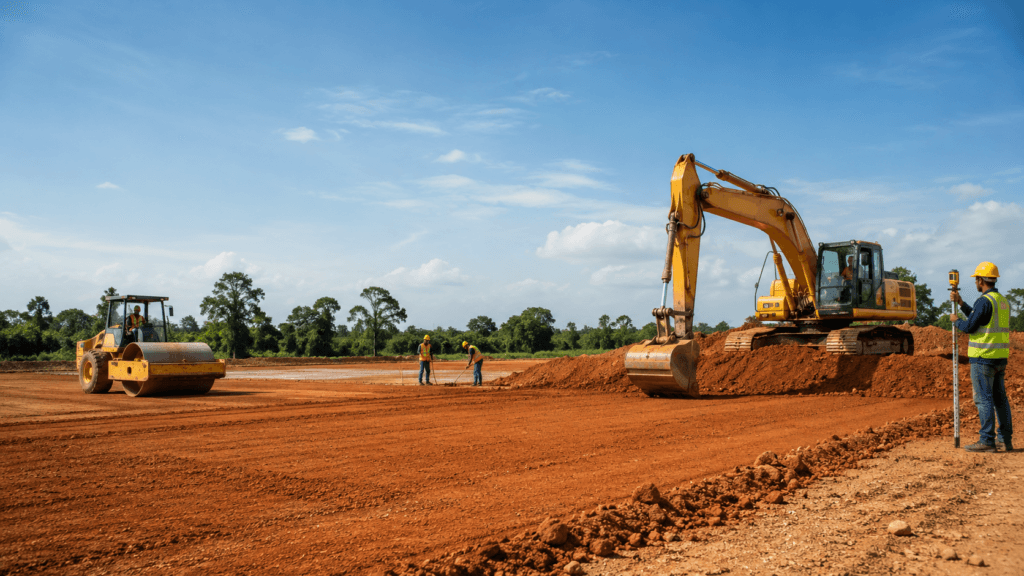
and grading is the process of preparing an existing area so that it becomes suitable for use or further construction. This may include leveling the ground, cutting and filling soil, clearing obstacles, adjusting ground levels, and setting the proper slope.
The purpose of land grading is not only to make the surface look flat. More importantly, it helps the area become usable, well-drained, and suitable for the next stage of construction.
Examples of work that usually require land grading include:
| Type of Work | Why Land Grading Is Needed First |
|---|---|
| Internal Road Construction | The ground level must be properly adjusted for safe and convenient traffic flow. |
| Parking Lot Construction | The surface must be level, compact, and free from water ponding. |
| Project Entrance and Exit Construction | The ground level must be adjusted to allow vehicles to enter and exit smoothly. |
| Construction Site Preparation | The area must be cleared and leveled before construction work begins. |
| Multipurpose Yard Construction | The base must be prepared to support various types of usage. |
| Asphalt or Concrete Paving | A strong and well-compacted base layer is required before applying the top surface. |
In simple terms, land grading turns a “raw area” into a “ready-to-use area.”
What Is Laterite Soil?
Laterite soil is a natural material that usually contains soil mixed with gravel, small stones, and hardened particles. It often appears red, brown, or orange, depending on the source of the material.
Laterite soil is commonly used for land filling, ground leveling, temporary access roads, site entrances, and as a base layer for certain types of roads or outdoor yards.
Its main advantage is that when it is spread and compacted properly, it helps make the ground firmer, improves load-bearing capacity, and creates a more usable surface.
How Is Laterite Soil Different from General Fill Soil?
Many people may wonder whether ordinary fill soil can be used instead of laterite soil. In reality, general fill soil and laterite soil serve different purposes.
| Topic | General Fill Soil | Laterite Soil |
|---|---|---|
| Material Characteristics | Mainly soil-based material | Soil mixed with gravel, stone, and hard particles |
| Load-Bearing Capacity | Depends on the type of soil | Generally denser and provides better load-bearing capacity |
| Compaction | Some types may still remain soft after compaction | Can become firm and dense when properly compacted |
| Usage | Suitable for general land filling and leveling | Suitable for roads, yards, and base layers |
| Problems After Rainfall | May become muddy or settle easily | More durable in use when properly compacted |
However, using laterite soil does not automatically solve every ground problem. The final quality still depends on material selection, layer thickness, leveling, moisture control, and compaction.
Why Is Laterite Soil Filling Important Before Building Roads or Parking Areas?
Laterite soil plays an important role in outdoor ground preparation because it helps strengthen the area before the next construction stage.
1. It Helps Adjust Ground Levels
Existing ground may be uneven, full of low spots, wheel ruts, or depressions. Laterite soil helps fill low areas and creates a more consistent ground level.
2. It Helps Make the Ground Firmer
When laterite soil is spread and compacted correctly, the particles lock together more tightly. This allows the ground to support weight better than soft or unprepared soil.
3. It Helps Reduce Ground Settlement
If a road surface or yard is built directly on soft ground, there is a higher chance of settlement in the future. Laterite soil filling can help strengthen the base and reduce this risk.
4. It Prepares the Base for Other Surface Materials
Before laying asphalt, pouring concrete, or applying other road surfaces, the ground usually needs a firm and level base. Laterite soil is often used as an important base preparation layer.
5. It Can Be Used as a Temporary or Basic Working Surface
In some areas, such as construction sites, agricultural access roads, warehouse entrances, or temporary routes, laterite soil can be used as a working surface by itself, provided that it is compacted well and maintained properly.
General Steps for Land Grading and Laterite Soil Filling
Land grading and laterite soil filling may look simple from the outside, as if it only involves dumping material and spreading it out. But in practice, proper planning is important because mistakes in the lower layers can create problems later.
1. Site Inspection
Before starting the work, the existing area should be inspected. Key factors include:
- Approximate area size
- Existing ground levels
- Soil condition
- Water pooling points
- Access for machinery
- Future use of the area
- Types of vehicles that will use the area
This step helps determine how much material is needed, how high the fill should be, and which direction the ground should slope for drainage.
2. Area Clearing
The existing area may contain weeds, debris, soil piles, waste materials, branches, or other unsuitable materials. These should be removed before filling.
If laterite soil is placed over weeds, organic matter, or soft debris, those materials may decompose over time, create voids underneath, and cause ground settlement.
3. Initial Ground Leveling
After clearing, the existing ground is roughly leveled. This may include cutting down high areas and filling low areas.
The key point is that the levels should support proper drainage. A surface that looks flat but does not drain well may turn into an unplanned pond after rainfall.
4. Laterite Soil Filling at the Right Thickness
When filling laterite soil, the thickness should be suitable for the intended use. A surface for light vehicles, a parking area, and an area with trucks entering regularly may require different layer thicknesses and compaction methods.
For areas that require strong compaction, laterite soil should not be placed too thick in a single layer. If the layer is too thick, compaction may only be effective at the top, while the lower part remains loose. In many cases, the material should be placed and compacted in layers.
5. Moisture Control and Compaction
Adding the right amount of water helps laterite soil compact more effectively. However, too much water can make the surface muddy and difficult to compact.
Compaction is one of the most important steps. Laterite soil that is only dumped and spread may look flat at first, but after vehicles pass over it repeatedly, it can develop wheel ruts, potholes, or settlement.
6. Final Level and Surface Check
After compaction, the surface level, smoothness, slope, and possible water pooling points should be checked, especially for wide yards or regularly used entrances.
A well-prepared area should direct water away from the surface and prevent it from flowing back toward buildings or unwanted areas.
Factors That Affect the Quality of Laterite Soil Filling
The durability of laterite soil work does not depend on the material alone. Several factors work together.
| Factor | Impact on Work Quality |
|---|---|
| Existing Soil Condition | If the original soil is very soft, ground improvement may be required first. |
| Quality of Laterite Soil | The material should be suitable for the work and not contain too much fine soil. |
| Thickness of Material Layer | The thickness must be appropriate for the expected load and usage. |
| Compaction | This is the key factor for firmness and long-term durability. |
| Slope | Helps reduce water ponding problems. |
| Drainage | Prevents the ground from becoming soft after rainfall. |
| Vehicle Load | Heavy vehicles require a stronger ground structure. |
When these factors are properly planned, laterite soil surfaces can become more stable and can also serve as a good base for other surface materials.
Common Problems Caused by Poor Land Grading
If land grading and laterite soil filling are rushed or not planned according to actual use, several problems may occur.
1. Water Pooling
This usually happens when the ground level is poorly designed or when there is no proper slope for water to drain away.
2. Uneven Settlement
Settlement often occurs when the original ground is soft, when organic materials remain underneath, or when compaction is insufficient.
3. Wheel Ruts
If the ground cannot support the load or if heavy vehicles pass through frequently, laterite soil surfaces may develop wheel ruts
4. Loose and Dusty Surface
This may happen when the material is too dry, contains too much fine dust, or has not been compacted properly.
5. Muddy Surface After Rain
If the laterite soil contains too much fine material or the drainage system is poor, the surface may retain water and become muddy after rainfall.
What Information Should Be Prepared Before Laterite Soil Filling?
Property owners or site managers should prepare some basic information to make work assessment more accurate.
- Approximate length and width of the area
- Desired filling height
- Intended use, such as road, parking area, or multipurpose yard
- Types of vehicles that will access the area
- Existing ground condition, such as soil, sand, crushed stone, or old surface
- Whether the area has water pooling problems
- Whether the laterite soil will be used as the final surface or as a base for asphalt or concrete
This information helps determine the proper grading method and laterite soil layer thickness.
Can Laterite Soil Be Used as a Permanent Surface?
The answer is yes, in some cases, depending on the type of use.
For areas with light traffic, farm access roads, construction site entrances, temporary routes, or areas that do not require a very smooth surface, compacted laterite soil can be used as the working surface.
However, if the area requires a smoother, cleaner, less dusty, and longer-lasting surface, or if vehicles use it regularly, an additional surface layer may be needed, such as:
- Crushed stone
- Asphaltic concrete
- Concrete
- Other suitable surface materials
Laterite soil can therefore serve either as a “usable surface” or as a “base preparation layer,” depending on the goal of the project.
How to Maintain a Laterite Soil Surface
Although laterite soil surfaces are relatively simple to use, they still require maintenance, especially in areas exposed to rain or frequent vehicle movement.
Basic maintenance includes:
- Filling potholes or wheel ruts
- Re-leveling uneven areas
- Fixing water pooling points
- Re-compacting heavily used areas
- Controlling water flow to prevent surface erosion
Small and regular maintenance can help extend the lifespan of a laterite soil surface much better than waiting until major damage occurs.
Summary
Land grading and laterite soil filling are important steps before building roads, parking areas, access routes, or other outdoor working spaces. They help create a suitable level, improve ground strength, support weight, and reduce future problems such as settlement and water pooling.
The key to quality work is not just filling the area with material. It also depends on proper site inspection, material selection, level design, drainage planning, and compaction.
A simple way to remember this is:
A strong lower base helps the upper surface last longer.
Because strong roads, parking areas, and outdoor surfaces do not begin with what we see on top. They begin with the foundation underneath.